Visa and Immigration Guide (7/23)
Teaching in Korea: EPIK vs. Language Academies
Every year, thousands of foreigners arrive in South Korea to teach English, drawn by steady pay, free housing, and the chance to live abroad.
You’ve got your degree, your passport, and a dream of teaching in Korea, but now comes the big question: Should you teach through the EPIK public school program, or take a job at a private language academy?
Both can be great paths, but they offer very different experiences. Here’s a breakdown to help you figure out which fits your goals, teaching style, and lifestyle.
Overview
EPIK (English Program in Korea) is a government-run program that places foreign English teachers in public elementary, middle, and high schools as English Teaching Assistants, working alongside a Korean co-teacher (CT). Since the majority of public schools in Korea are elementary schools, most new teachers are placed at that level
Current Number of Public Schools in Korea (2025, Ministry of Education):
| Elementary | Middle | High |
| 6,192 | 3,292 | 2,387 |
Korea’s education system follows a 6-3-3 structure:
• Elementary School: Grades 1–6 (Ages 6–12)
• Middle School: Grades 7–9 (Ages 12–15)
• High School: Grades 10–12 (Ages 15–18)
| Note: English is taught in public schools from third grade, and thus, teachers are NOT expected to teach first and second grade (ages 6-8). |
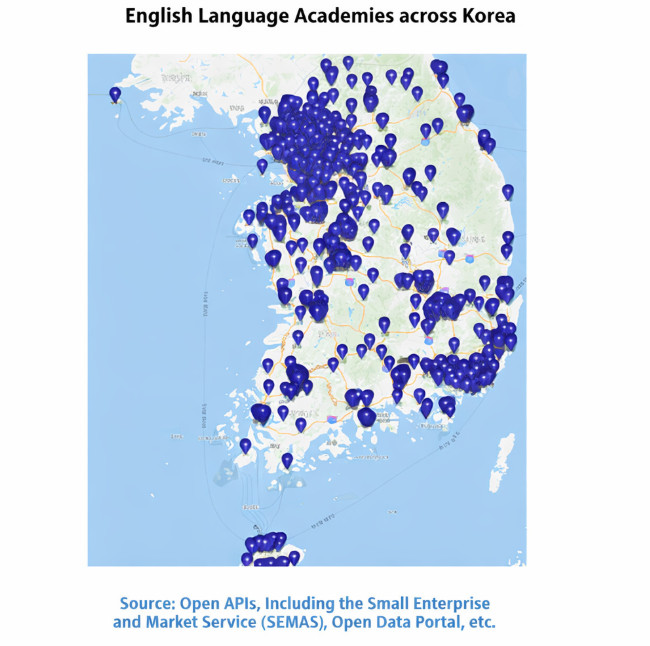
English Language Academies are privately run institutions that focus on English language learning for students of all ages, though most cater to kindergarten and elementary-level learners. Teachers are employed directly by private owners or large franchise chains, and the schools are heavily concentrated in urban centers such as Seoul, Busan, and Gyeonggi-do.
Life in an academy is fast-paced and hands-on. Teachers usually work alone, responsible for every aspect of the classroom: lesson planning, grading, student assessments, and sometimes recruiting new students. The workload can be demanding, but teachers often have more control over their teaching.
The trade-offs are clear. Hours are longer, schedules are more variable, and vacation time is limited, often just 11 days in the first year. Language academies are private businesses, so policies, management styles, and experiences can differ dramatically from school to school. Careful review of contracts, reputations, and teacher feedback is essential.
Language academies work differently, though structures vary. There’s usually a director, an academic supervisor, Korean English teachers, and other native English teachers. You can co-teach with Korean teachers or other native English teachers, but you often teach the same students, making communication essential. In franchise academies, big curriculum or policy decisions may need corporate approval.
Current Number of English Language Academies in Korea
There are an estimated 5,694 English language academies across Korea.
EPIK vs. Language Academies
1. Qualifications & Eligibility
The minimum requirements for both schools and academies are similar:
• Native English speaker with citizenship from one of the seven designated countries (Australia, Canada, Ireland, New Zealand, South Africa, U.K., and U.S.)*
• Bachelor’s degree from an accredited university in one of the designated countries
• Clean national/federal background check
• Clean health examination upon arrival in Korea
*Special Exceptions for Language Academies:
|
EPIK has stricter hiring standards. Applicants must hold one of the following:
• Teaching license or certificate
• Bachelor’s degree in Education or Related Major (e.g., TESOL, Math Education, etc.)
• 100-hour or longer TEFL, TESOL, or CELTA certification
For academies, these are not needed.
2. Salary, Working Hours, Vacation Time, and Benefits
Language academies often pay more, but the work is often more demanding. Teachers are responsible for teaching and grading duties.
EPIK pays less with a cap at 2.8 million KRW base monthly salary. Teaching hours are capped at 22 per week, vacations total 26 days plus holidays, and housing is provided.
| Language Academies | EPIK (Public Schools) | |
| Base Monthly Salary | 2.4 and upwards million KRW (increase based on education and experience) | 2.1 - 2.35 million KRW starting |
| Teaching Hours (Work Hours: 40 Hours) |
~ 30 hours per week
|
Up to 22 hours per week (unless otherwise requested)
|
| School Schedule |
Shifts vary; (Morning: 9 AM – 6 PM) or (Evening: 1 PM – 9 PM/ 2 PM - 10 PM) |
~8:30 AM–4:30 PM, Monday to Friday |
| Vacation | 11 days or more, plus national holidays | 26 days, plus national holidays |
| Housing | Free furnished one-room studio apartment (utilities not included) | Free furnished one-room studio apartment (utilities not included) |
| Airfare and Relocation Support | Often, one-way flight reimbursement |
One-way flight reimbursement (Economy Class) Return flight following completion of contract |
| Severance Pay | 1 month’s salary after contract completion (1st Year) + subsequent years | 1 month’s salary after contract completion (1st Year) + subsequent years |
| Health Insurance | 50/50 split with School (3.545% for teachers) | 50/50 split with School (3.545% for teachers) |
| National Pension | 50/50 split with School (4.5% for teachers) | 50/50 split with School (4.5% for teachers) |
3. Location and Placement
If living in a big city or a specific location is important to you, language academies offer more control. If you’re open to smaller communities and don't mind being placed in any region of Korea, EPIK may be a better fit.
Language Academies:
• Found across Korea, especially in major cities
• Teachers choose preferred locations and are easily able to accept and decline offers
• For our agency specifically, before you sign a contract, you can get housing photos and a current teacher's email.
You work with other EFL teachers and members of staff who speak English.
EPIK (Public Schools):
• Placements are assigned by regional education offices after orientation. Teachers do not have the ability to choose their location.
• Teachers are only notified of their region two weeks before their arrival in Korea (E.g., assigned to Gyeonggi-do Province)
• Teachers can list their location preferences, but it is not guaranteed
• Teachers are placed in schools without other options
• Teachers are often placed in small towns or rural areas and can rotate between multiple schools
Most teachers are the only English teacher in the school, with the ability to speak English.
4. Work Environment
Classes in language academies are small, usually five to fifteen students, giving teachers more chances to work closely with each student. Teachers handle everything in the classroom, from lesson planning to grading, and often teach multiple age groups in a single day, such as preschool in the morning and elementary students in the afternoon. Academies also offer more opportunities to meet and collaborate with other native English teachers.
In EPIK public schools, most teachers are the only native English speakers in their school. They work alongside a Korean co-teacher and manage larger classes of 30 to 40 students. Lessons follow government textbooks and focus on communication, cultural understanding, and building confidence rather than on academic performance. Teachers are not evaluated based on students’ test scores or grades, which makes the workload less stressful.
| Language Academies | EPIK (Public Schools) | |
| Native Teachers | Work with several other native English teachers | Usually, the only native English teacher at your school |
| Co-Teacher | Often teach alone (with Classroom Assistant) and other support staff. | Not required, especially if you rotate between multiple schools. |
| Work Culture |
Often fast-paced, but the academy provides lesson plans, textbooks and curriculums. |
Slower-paced, but you need to make your own lesson plans, choose books and grade assignments. |
| Class Size | 5~15 students | 30~40 students (smaller in rural schools) |
| Student Age Groups | Diverse, Pre-School to Adults (4~18+ Years) |
Elementary, Middle, or High School (6~18 Years) |
| Facilities | Often modern with Smartboards & Online Teaching Platforms/Tools | Standard (Chalkboard/Whiteboard, Laptop/Computer, etc.) |
5. Hiring Periods
Timing is important. EPIK has two fixed hiring periods each year, with Spring and Fall semesters, with months of preparation, document submission, and interviews. Placement is only revealed after orientation in Korea. The process is predictable but rigid.
Language academies hire year-round, although the most popular times are in March (Spring Semester) and September (Fall Semester). Applications can be sent directly to schools or through recruiters, and interviews and contract offers can happen within weeks. The freedom to start when and where you want can be a huge advantage.
EPIK (Public Schools):
1. Apply 3–6 months before the start of the school term. (give exact dates)
2. Submit documents (degree, background check, reference letters, and TEFL certificate).
3. Complete an interview with the EPIK office or an official recruiter.
4. Receive placement after orientation in Korea.
Language Academies:
1. Apply year-round directly to schools or through a recruiter.
2. Expect interviews within a few weeks.
3. Review contracts carefully before signing.
4. Most schools handle visa processing and flight arrangements.
Summary
EPIK provides structure, generous vacation time, and predictable hours, making it a good fit for teachers who prefer a slower, more stable pace.
Language academies offer higher pay, smaller classes, and more control over your location, but they come with longer hours and a more demanding workload.
Both paths can be rewarding depending on your goals. Teachers who value routine and a steady schedule often thrive in EPIK, while those who enjoy a fast-paced environment and greater autonomy in the classroom are usually happier in private language academies.
If Your #1 Priority Teaching in Korea is:
- High Salary = Language Academy
- Location = Language Academy
- Leisure/Vacation Time = EPIK
- Integrating and making friends = Language Academy
TAGS
Share
Embark Recruiting Blogs
Embark Recruiting
As former native English teachers in Korea, we know exactly what it’s like to navigate teaching abroad. That’s why we’re committed to increasing transparency in schools and improving Korea’s ESL teaching industry. At Embark Recruiting, we provide full support to help you succeed. Our blogs offer guidance, tips, and insider knowledge for teaching in Korea.