When you step into a classroom, one of the first things you notice is that teaching is not one singular skill; the way you teach a five year old is completely different from how you teach a thirteen year old. At the same time, the curriculum you follow, whether it is play based, academic, or conversation/debate-focused, can change how you teach the students.
Understanding these differences is essential if you want to become an effective and adaptable educator.
Teaching Kindergarten
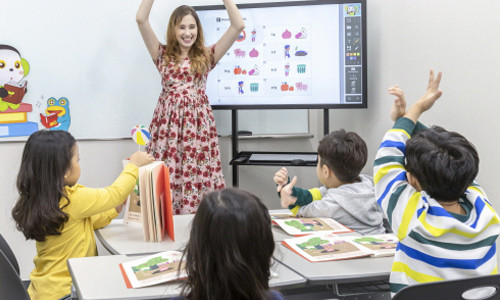
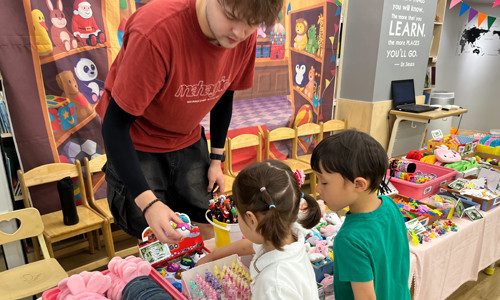
Kindergarten classrooms are built around routine, energy, and emotional safety. At this age, students are still developing attention span, self regulation, and social awareness. Teaching here is less about delivering content and more about guiding behavior, building confidence, and creating positive associations with school and learning English. This creates a positive basis for further English learning as the students get older.
Play-based curricula are most common at this stage. Learning happens through songs, storytelling, crafts, and games. Language is absorbed through repetition and interaction rather than explanation. Instructions must be short, clear, and physically modeled. Visual cues and gestures are just as important as spoken words, such as word association.
In a more academic focused kindergarten classroom, there may be greater emphasis on phonics, early reading, and structured workbook activities. Even so, successful teachers still rely on movement, rewards, and creative transitions to maintain engagement. Young children cannot sit still and absorb lecture style teaching for long periods, so maintaing their attention is crucial, even more so in this type of learning environment.
The key teaching style at this age is having patience and keep to a set routine. The learning is entirely teacher-led, with one's tone of voice, facial expression, and energy level directly influencing their students behaviour.
Teaching Elementary
By elementary school, students have stronger cognitive abilities and longer attention spans. They can follow multi step instructions, work independently for short periods, and begin thinking more logically.
In a play based elementary curriculum, learning still includes games and interactive activities, but the objectives become clearer and more skill driven. Activities may target reading comprehension, structured writing, or grammar accuracy, even if presented in an engaging way.
An academic focused elementary classroom typically includes textbooks, workbooks, weekly vocabulary lists, and regular testing. Teaching involves clear explanations of concepts, guided practice, and gradual release toward independent work. Classroom management shifts from constant supervision to expectation setting. Students can begin taking responsibility for homework and class behavior.
Conversation focused elementary classes introduce more speaking tasks, role plays, and structured dialogue practice. Students are not yet ready for abstract debate, but they can discuss personal experiences, preferences, and simple opinions with guidance.
The teaching style at this level becomes more balanced. The teacher is still energetic and encouraging but begins acting more as a coach than a performer. Students are guided toward independence rather than managed every moment.
Teaching Middle School
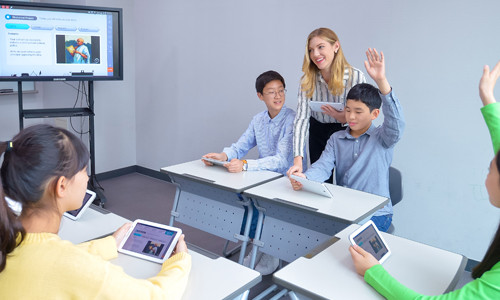
Middle school students are in a very different developmental stage. They are forming identities, questioning authority, and becoming more socially aware. Motivation can fluctuate significantly.
Play based learning becomes less effective unless adapted carefully. Students at this age may resist activities they perceive as childish. Engagement must feel meaningful and age appropriate.
- Academic focused middle school classes often emphasize essay writing, reading analysis, structured grammar instruction, and exam preparation. Students can understand explanations about why a rule exists, not just how to use it. Teaching becomes more discussion oriented, and expectations around deadlines and responsibility increase.
- Conversation and debate based curricula are particularly effective at this level. Students are capable of expressing opinions, supporting arguments, and analyzing topics. Structured debates, persuasive speaking tasks, and critical thinking exercises can be powerful tools. The teacher’s role shifts from leader to facilitator, creating space for student voices rather than dominating the room.
Classroom management becomes more psychological than physical. The teacher manages motivation, peer dynamics, and self esteem rather than simple behavior.

Comparing Teaching Styles Across Age Groups
- In kindergarten, teaching is performance driven and emotionally supportive. The teacher’s personality fills the room.
- In elementary school, teaching becomes skill focused and structured. Energy is balanced with instruction.
- In middle school, teaching becomes discussion driven and intellectually guided. The teacher facilitates growth rather than controlling every detail.
The younger the students, the more concrete and physical the learning must be. The older the students, the more abstract and analytical it can become.
Comparing Curriculums
- Play based curricula prioritize engagement, emotional development, and natural language acquisition. They are most effective with younger learners but can be adapted for older students through simulations, role play, and project based learning.
- Academic curricula prioritize measurable outcomes, structured progression, and test preparation. They can work across all age groups, but delivery must be developmentally appropriate. Worksheets for kindergarten look very different from analytical essays in middle school.
- Conversation and debate-based curricula focus on fluency, confidence, and critical thinking. These approaches are most effective with upper elementary and middle school students who have enough language foundation to express ideas clearly.
No curriculum is inherently better than another. Effectiveness depends on the age group, student needs, and the teacher’s ability to adapt.
The Most Effective Teachers Adapt
Strong educators are not focused on using only one teaching style. They understand that kindergarten requires warmth and structure. Elementary requires guidance and gradual independence. Middle school requires respect and intellectual engagement.
They also recognize that even within one age group, classrooms differ. Some students need more structure. Some thrive with creative freedom. Some respond best to academic rigor, while others flourish in discussion based environments.
Teaching is not about choosing one method. It is about knowing when and how to adjust.
When you understand how age and curriculum shape classroom dynamics, you become more intentional. You stop expecting middle school students to respond like kindergarteners, and you stop expecting kindergarteners to think like teenagers.
That awareness is what transforms teaching from delivering lessons into truly guiding development.
TAGS
Share

Embark Recruiting Blogs
Embark Recruiting
As former native English teachers in Korea, we know exactly what it’s like to navigate teaching abroad. That’s why we’re committed to increasing transparency in schools and improving Korea’s ESL teaching industry. At Embark Recruiting, we provide full support to help you succeed. Our blogs offer guidance, tips, and insider knowledge for teaching in Korea.